
Articles · Methods
The Meeting Where Design Wasn't in the Room
The pricing change, the roadmap cut, the partnership commitment: the decisions that shape your product most are made in rooms design never enters. Here is what changes when it does.
THE UX FRICTION REPORT
AI GENERATEDNEW ARTICLES BY EMAIL
Get notified when new articles are published.
That did not go through. Check the address and try again.

The most consequential design meeting of your quarter already happened. Design was not invited. It was called something else: pricing, planning, partnerships, the roadmap review where three quarters of the experience got traded away in forty minutes.
Decisions do not wait for the design review

By the time a project reaches a design review, its shape is mostly settled: the audience was chosen in a strategy session, the scope in a planning meeting, the deadline in a sales call. Design is then asked to make the settled thing usable, which is a little like asking the architect to review the building from the parking lot of the finished building.
Walk the calendar backwards and the pattern is hard to unsee. The price was set in a finance review where the only customer present was a spreadsheet. The roadmap was cut in a planning session where engineering capacity was a fact and user impact was a rumor. The partnership was committed in a negotiation where the date got agreed before anyone asked what keeping it would feel like from inside the product. Every one of those calls was a design decision. Almost none of them were made in a room with design in it.
None of this is malice. It is sequence. Each room decides what it can see, and no room contained anyone whose job is to ask what the customer will experience when all of these reasonable decisions land at once. That question, unasked, does not disappear. It gets answered by default, in production, by your users.
Nielsen Norman Group's maturity model gives the condition a name. The first of its six stages is called Absent, the stage where UX is ignored or nonexistent and its concerns play no part in how the organization decides anything. Few companies would describe themselves that way. They employ designers. They hold reviews. But maturity is not measured at the design review. It is measured in the rooms where the quarter gets decided, and by that measure, plenty of companies with good design teams are running absent exactly where it costs the most.
Three rooms where the product actually gets designed
Take the pricing review. A price goes up, a tier is renamed, a discount gets fenced off. In the room, it is margin arithmetic, and the arithmetic is correct. Outside the room, it is the renewal conversation, where a customer decides whether the product still feels like the one they bought. Nobody in the meeting lied, and nobody mentioned the customer. The number changed, and the experience changed underneath it.
Take the roadmap cut. Something has to give, and what gives is the item with the quietest constituency. Often that is the unglamorous step the onboarding quietly depends on: the migration path, the import that works, the empty state that makes the first week survivable. The cut is rational line by line. It is only visible as a whole from the user's chair, and that chair is empty.
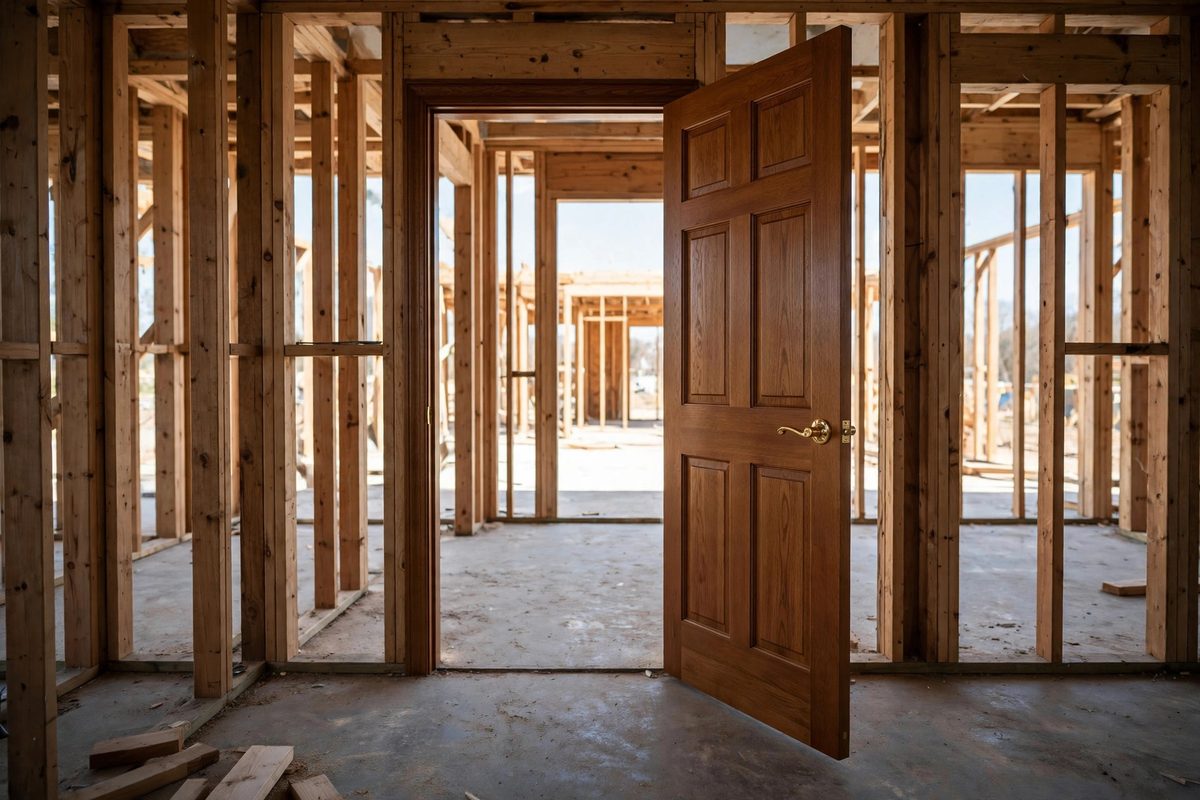
Take the partnership announcement. A logo, a date, a commitment to an integration. In the room, it is growth. In the product, it is a promise: a new door that opens into a hallway nobody has built yet. Customers never experience a partnership as strategy. They experience it as the quality of the seam, and seams are design work, done or not done long before the press release.
None of these rooms made a bad decision, exactly. They made partial ones, at full confidence, because the person whose job is the whole picture was in a different meeting, polishing the screens these decisions would eventually demand.
The evidence is not subtle
McKinsey tracked the design practices of 300 publicly listed companies over a five-year period, collecting more than two million pieces of financial data and recording more than 100,000 design actions. The companies in the top quartile of the resulting McKinsey Design Index increased their revenues at nearly twice the rate of their industry counterparts. In the report's own figures, the gap came to 32 percentage points higher revenue growth and 56 percentage points higher growth in total returns to shareholders across the five years.
Read what the top performers were actually doing, though, because it was not what most people picture. The first of the study's four themes was analytical leadership: design treated as a top-management issue, measured with the same rigor as revenues and costs. The report is blunt about what happens everywhere else. Design issues stay stuck in middle management, rarely rising to the rooms where the company is actually steered.
Notice where the value sits. Not in the studio. The report says the winning companies combined design and business leadership, with design thinking, in its words, clearly embedded in the deliberations of their top teams. The Index is not rewarding better taste. It is rewarding proximity: design close enough to a decision to change it while it is still a decision.
One honest caveat, because the study offers it itself: this is correlation, strong and consistent across the three industries examined, not a machine that turns one hire into doubled growth. What the evidence does rule out is the comfortable story that design strength is a decoration a company buys after the real decisions are made. At the companies that won, the order ran the other way.
The method: get the questions into the room
A senior design voice does not need to attend every meeting. It needs to attend the right ones, carrying the right equipment. The equipment is three questions and a habit.
- Name the decision meetings, and be in them. Pricing, planning, partnerships, the roadmap review: in most companies, a short list of recurring meetings decides the product's future each quarter. Write the list down honestly. If design is not on those invites, that is the first finding, and it precedes every other finding.
- Ask what the customer experiences when the decision lands. Not in the abstract. Walk it forward: the renewal email, the missing feature on the first morning, the seam where a partner's product hands off to yours. Decisions sound different when somebody narrates their second half.
- Ask what else depends on the thing being changed. Pricing moves and roadmap cuts are load-bearing in places the room cannot see. The dependency question turns a confident cut into an informed one, and it costs about ninety seconds.
- Write the tradeoff down, with its price attached. Every decision sacrifices something. The discipline is choosing the sacrifice on purpose, in the minutes, rather than discovering it in the launch retrospective.
- Bring the receipts afterward. After launch, return to the room with what people actually did. Nothing makes the seat permanent like a short, accurate memory of what the last decision cost.
Step four deserves its evidence. Tradeoffs are where an absent design function shows up first, because the customer's side of the trade has no advocate and therefore no weight:
But a design voice slows decisions down
This is the objection, and it deserves a plain answer, because the fear underneath it is legitimate. Nobody needs another meeting, another opinion, another week of alignment. Three things are worth saying.
The voice does not add a meeting. It attends one that already exists. The decision still takes forty minutes; it just takes them with the customer's half of the story in the room.
What usually gets called slowness is the argument arriving early. That argument happens anyway. It happens in the redesign kickoff, in the churn review, in the apology drafted after launch. Early is simply the cheapest seat in which to have it.
And compare like with like. The design review at the end of the process, the one nobody accuses of slowing anything down, is quietly the most expensive meeting in the building: it discovers the problems after they have been built, priced, and promised. Speed measured at adjournment is a fiction. Speed is measured at launch, and again at the renewal after that.
You may not need a department. You need the chair filled.
Most companies at this stage cannot justify a full-time senior design executive, and do not need one. They need the chair filled in the six meetings a quarter where the product's future is actually decided, by someone senior enough to be heard and independent enough to say the unwelcome thing. That is what fractional design leadership is: not a part-time pair of hands, but a full-strength voice at the moments that matter.
A part-time pair of hands produces more screens. A voice in the room produces different decisions, and different decisions are the only kind that compound. The roadmap nobody has to apologize for was written in those rooms, with the customer's chair occupied.
Design debt is rarely created in the design tool. It is created in the meeting, and invoiced at the launch.
So check the invite list before you check the org chart. The most expensive design problem in the building is rarely a shortage of design talent. It is a shortage of design presence, usually about one calendar invitation wide. Fill the chair, and the meetings start making a different product: quietly, forty minutes at a time.
Was this useful?
The short version
Everything above comes down to one habit: look at your product the way your customers have to. If you would like a senior set of eyes on yours, that is the work I do.
Sources
- McKinsey & Company (2018). The Business Value of Design: McKinsey Design Index. Top-quartile companies showed nearly double the revenue growth of their industry peers over five years. Full report (PDF): https://cdn.relayto.com/media/optimized/baiintmprcy0fvqw51qe_the-business-value-of-design-vf-optimized-5d4ade0849ac5.pdf
- Nielsen Norman Group. The 6 Levels of UX Maturity: how design moves from absent to integrated in organizational decisions. https://www.nngroup.com/articles/ux-maturity-model/