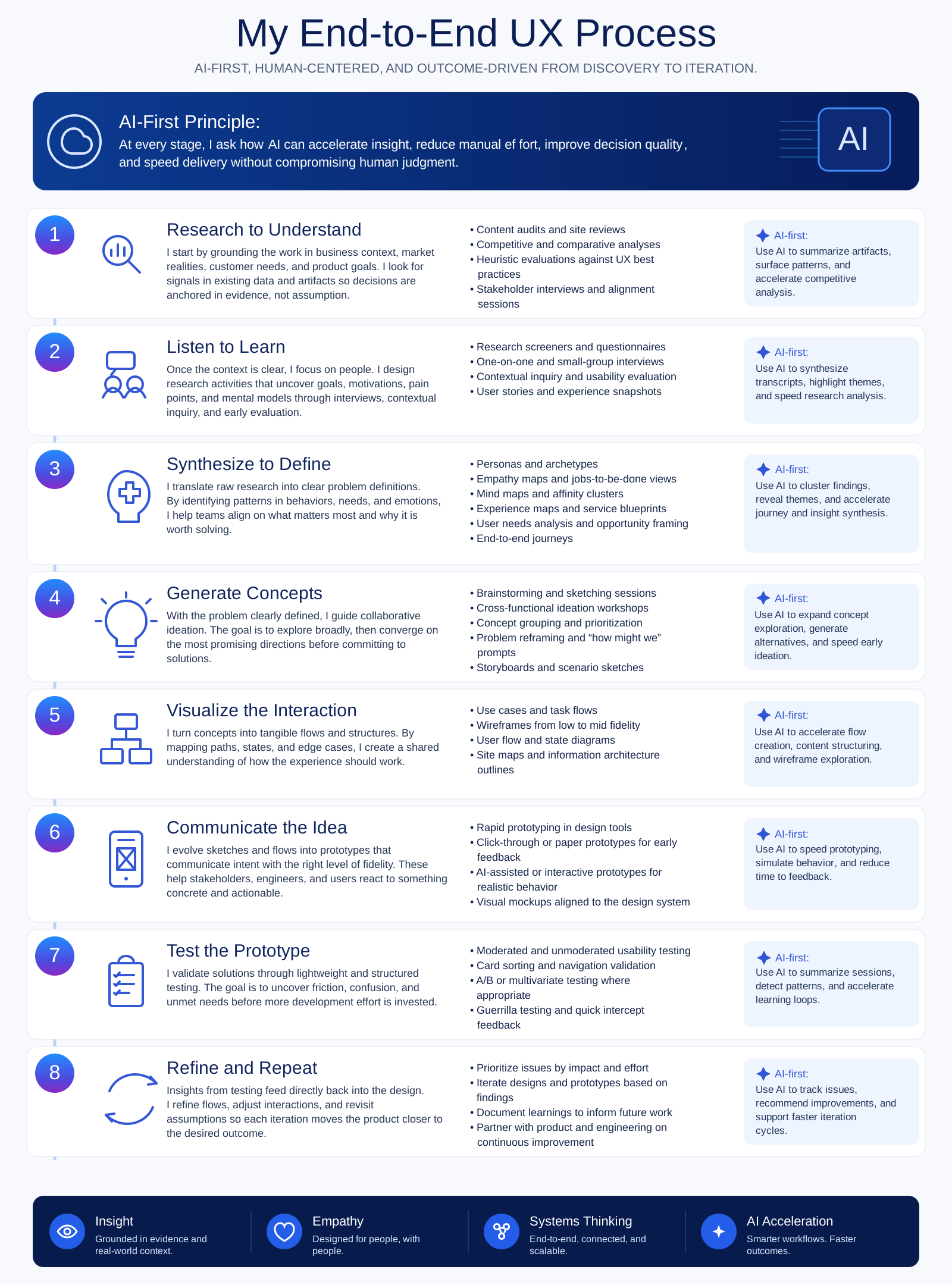
My End to End UX Process

1

Research to Understand

I start by immersing myself in the business context and customer landscape. This means clarifying objectives, understanding the market, and learning how the product fits into the broader ecosystem. I look for signals in existing data and artifacts that reveal strengths, gaps, and opportunities so that the work is anchored in real outcomes, not assumptions.

  • Content audits and site reviews
  • Competitive and comparative analyses
  • Heuristic evaluations against UX best practices
  • Stakeholder interviews and alignment sessions

2

Listen to Learn

Once the context is clear, I focus on people. I design research activities that encourage storytelling so I can capture users’ goals, motivations, pain points, and mental models. During interviews, contextual inquiries, and early usability sessions, I document not only what people say, but also what they do and how they feel.

  • Questionnaires and screeners to recruit the right users
  • One on one and small group user interviews
  • Contextual inquiries and usability evaluations
  • User stories and experience snapshots

3

Synthesize to Define

I then translate raw research into clear problem definitions. By mapping patterns in behavior, needs, and emotions, I create models that represent real users and their journeys. This synthesis work sharpens the focus of the project, helping teams align on which problems matter most and why they are worth solving.

  • Personas and archetypes
  • Empathy maps and jobs to be done views
  • Mind maps and affinity clusters
  • Experience maps and service blueprints
  • User needs analysis and opportunity framing
  • End to end user journeys

4

Generate Concepts

With a well defined problem, I guide collaborative ideation. I bring stakeholders, engineers, and product partners into structured sessions that encourage divergent thinking, then converge on the most promising directions. The goal is to explore a wide range of options before we commit to specific solutions.

  • Structured brainstorming and sketching sessions
  • Ideation workshops with cross functional teams
  • Concept grouping and prioritization
  • Problem framing reframes and “how might we” prompts
  • Storyboards and scenario sketches

5

Visualize the Interaction

Next, I translate concepts into tangible flows. I visualize key paths, edge cases, and system states so that the team shares a common understanding of how the experience should work. These artifacts become a living reference that guides both design and implementation.

  • Use cases and task flows
  • Wireframes from low to mid fidelity
  • User flow diagrams and state diagrams
  • Site maps and information architecture outlines

6

Communicate the Idea

I evolve sketches and flows into prototypes that communicate intent with the right level of fidelity for the moment. These prototypes help stakeholders, engineers, and users react to something concrete, reducing ambiguity and enabling faster, more grounded decisions.

  • Rapid prototyping in design tools
  • Paper or click through prototypes for early feedback
  • AI vibe coded / Figma interactive prototypes for realistic behavior
  • Visual mockups aligned to the design system

7

Test the Prototype

I validate solutions through structured and lightweight testing methods. The goal is to uncover friction, misunderstandings, and unmet needs before full development effort is invested. I focus on what users are trying to accomplish and how effectively the design enables that.

  • Moderated and unmoderated usability testing
  • Card sorting and navigation validation
  • A/B or multivariate testing where appropriate
  • Guerrilla testing and quick intercept feedback

8

Refine and Repeat

Insights from testing feed directly back into the design. I refine flows, adjust interactions, and revisit assumptions, treating each iteration as an opportunity to move closer to the desired outcome. This cycle of learning and refinement continues as the product evolves in market.

  • Prioritizing issues based on impact and effort
  • Iterating designs and prototypes based on findings
  • Documenting learnings to inform future work
  • Partnering with product and engineering on ongoing improvements - align on design sprints


Connecting Design To Outcomes: How The Product Model Guides Every Decision

The product model is the structure that keeps my work anchored to real outcomes instead of isolated deliverables. Before I commit to solutions, I work with product and stakeholders to clarify what we are trying to change in the business and in the customer’s life. That means defining success metrics, understanding how those metrics ladder up to company goals, and agreeing on the signals that will tell us whether we are moving in the right direction.

From there, I treat every UX effort as a testable bet inside that model. Problems and opportunities are framed as hypotheses: which users are affected, what value is at risk, and why solving this now matters more than competing priorities. This turns roadmaps into a series of intentional experiments instead of a list of features. It also gives the team a shared language to make tradeoffs, align scope, and decide where to invest design and engineering effort.

The product model also connects proactive and reactive work. Strategic discoveries, long term vision exercises, and new market opportunities live in the same framework as support issues, analytics anomalies, and usability defects. By tying all of these inputs back to outcomes, I can balance quick wins with deeper redesigns and ensure we are not just fixing symptoms but improving the overall system.

Finally, the product model creates a feedback loop. Once experiences ship, I revisit the original hypotheses, look at the data, listen to customers, and capture what we learned. Those insights feed back into the model as updated assumptions, refined metrics, and new opportunities. Over time this creates a living map of how the product delivers value, and it keeps design, product, and engineering aligned on what we are building, why it matters, and what we should do next.

If you have taken the time to make it this far, thank you for reading and learning more about my approach.